Kubernetes Part 2
Let’s discuss Kubernetes without sounding too technical?
Here’s a simple way to understand it:
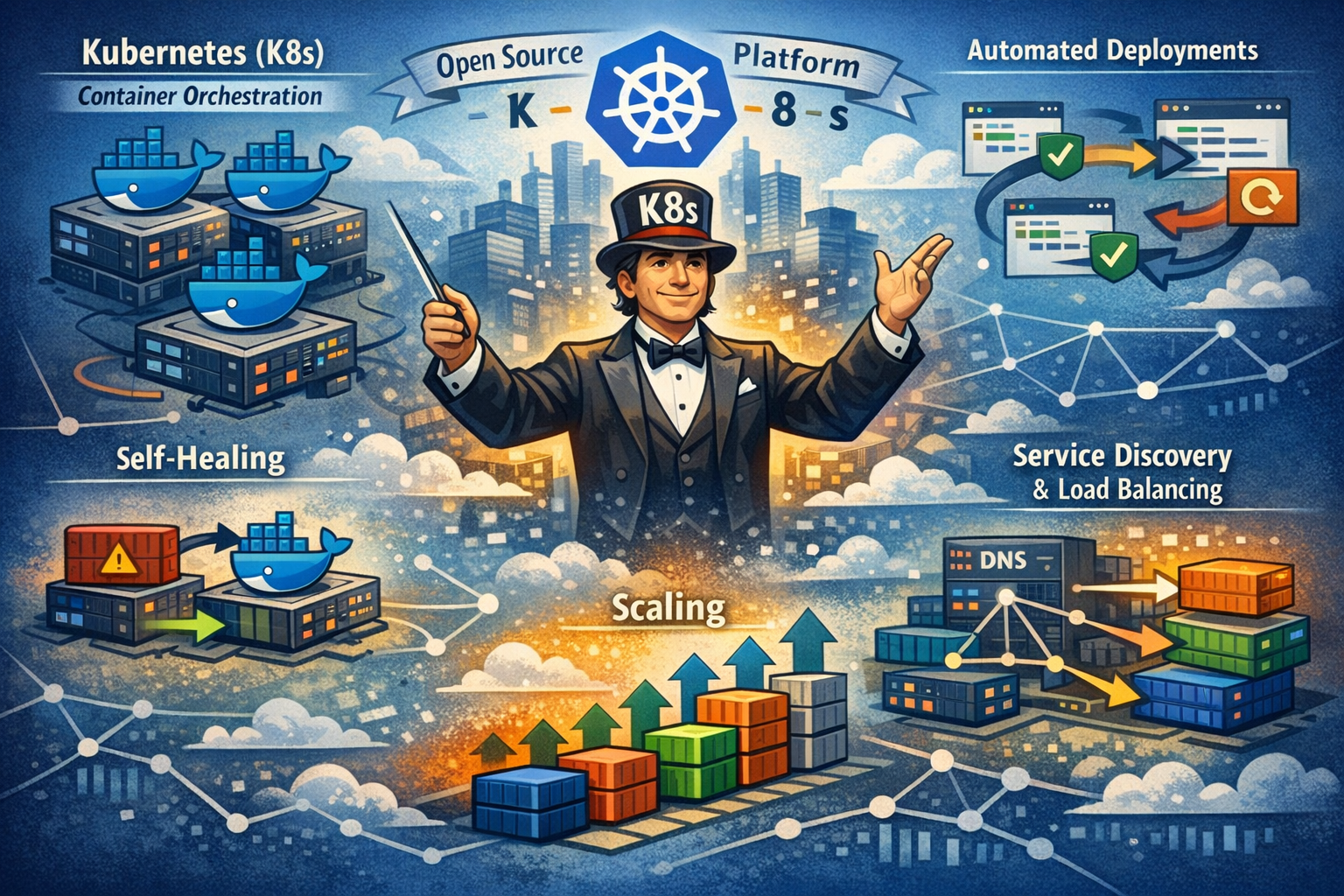
Think of Kubernetes like a conductor leading an orchestra.
1️⃣ Containers Are the Musicians
Each container has a specific role—just like musicians playing different instruments.
Individually, they can perform. But without coordination, the result is chaos.
2️⃣ Kubernetes Is the Conductor
Kubernetes ensures every container plays at the right time, in the right way.
It coordinates everything so the system runs smoothly and reliably.
3️⃣ Deployment Is the Music Sheet
Instead of manually controlling everything, you define what you want.
Kubernetes follows that “sheet” and makes sure the system matches it.
4️⃣ Self-Healing Keeps the Performance Going
If a musician stops playing, the conductor quickly replaces them.
Kubernetes automatically restarts or replaces failed containers.
5️⃣ Scaling Adds or Removes Musicians
If the audience grows, you need more sound.
Kubernetes adds more containers when demand increases—and removes them when it drops.
6️⃣ Load Balancing Keeps Everything Even
The conductor ensures no section is overwhelmed.
Kubernetes distributes traffic across containers to keep performance stable.
The Big Idea
Kubernetes isn’t just about running containers. It’s about orchestrating them efficiently at scale.
The Bottom Line
Originally developed by Google, Kubernetes has become the industry standard for managing modern applications.
Because when systems grow complex, you don’t just need musicians—you need a conductor.
How do you explain Kubernetes to beginners?
Share your analogy below 👇